
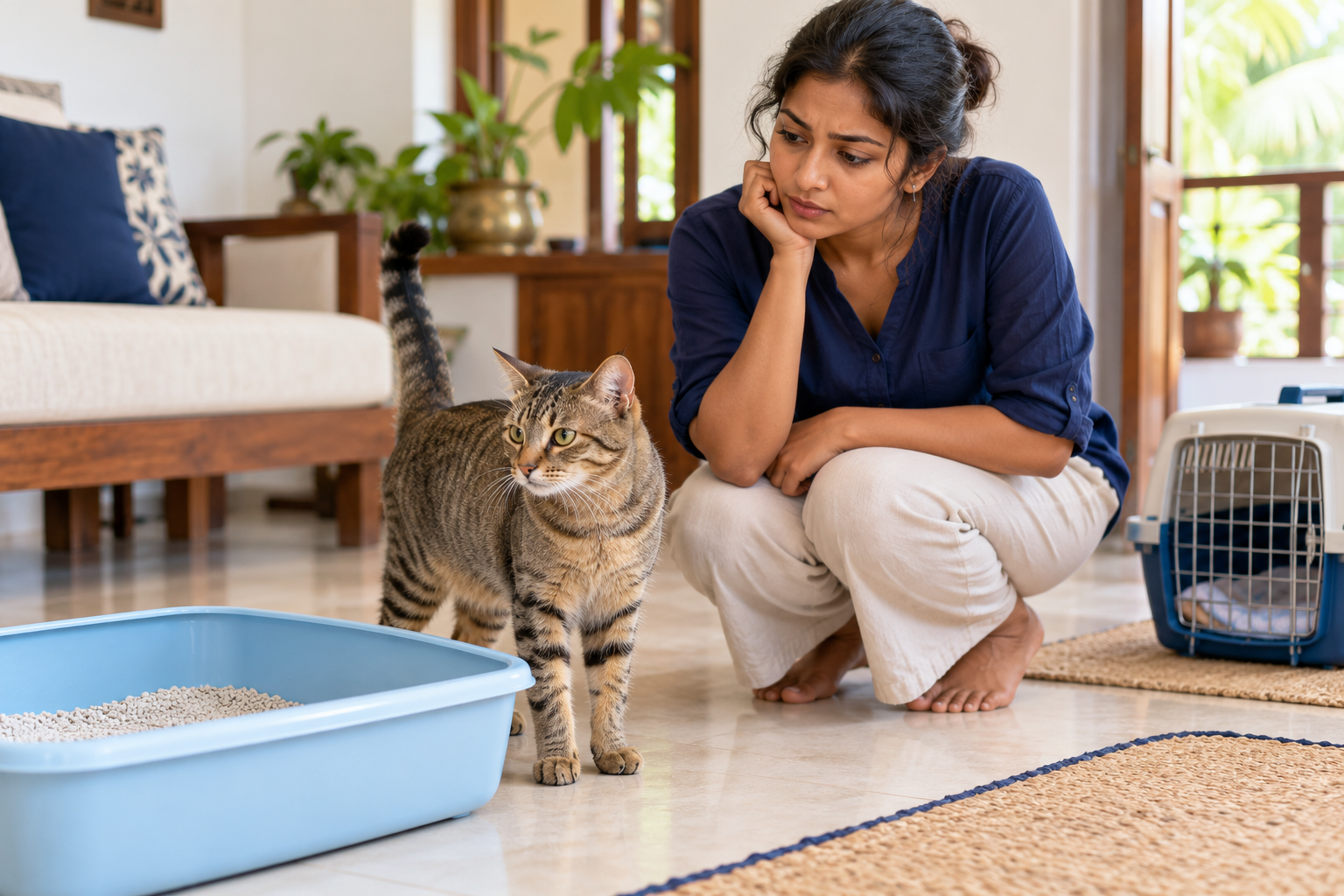
Watch for changes in toilet habits
Repeated visits to the litter tray, straining, crying, blood in the urine or urinating outside the tray all deserve veterinary attention. A cat may also lick around the genitals more than usual. Straining can look like constipation; if you are unsure whether urine is coming out, call a vet straight away.
Little or no urine means act now
A few drops do not rule out a blockage. Seek urgent veterinary help if your cat repeatedly strains and passes little or no urine. Vomiting, weakness or collapse makes the situation even more concerning, but you should not wait for these signs. Female cats with urinary difficulty also need prompt assessment.
Get help safely
- Call while arranging transport. Explain when you last saw normal urination and what has changed.
- Use a secure, well-ventilated carrier. Do not press or massage your cat’s abdomen or try to empty the bladder yourself.
- Do not give human painkillers, leftover antibiotics or home remedies. Do not delay care to collect a urine sample.
- Check that the clinic can receive your cat. If it cannot, seek the nearest available emergency veterinary service.
Different causes need different care
Inflammation, stones, plugs and infection can cause similar urinary signs. Your vet may recommend urine tests, blood tests or imaging after assessing your cat. Follow the treatment and follow-up plan, and ask about water intake, diet and the home environment. A change of food cannot treat an emergency blockage.
General education for dogs and cats; not a diagnosis or an individual treatment plan.