
Act first, even if you are unsure
- Move your pet away from the substance if you can do so safely. Keep children and other animals away too.
- Call the nearest available veterinary clinic. If your usual clinic cannot be reached, seek another promptly; do not wait for a website appointment reply.
- Photograph the label, including ingredients, and bring the packaging safely if possible. Note the time, possible amount, your pet’s weight and any symptoms. Do not delay travel while searching for proof.
Which symptoms are concerning?
Vomiting, drooling, weakness, tremors, seizures, bleeding or breathing changes can occur with poisoning, but they can also have other causes. Some effects are delayed. A pet that seems normal may still need treatment. Collapse, seizures or difficulty breathing require immediate veterinary care.
Do not try to make your pet vomit
Salt, peroxide and other home methods can cause further harm. Do not force milk, oil, food, water or charcoal into the mouth as a treatment. Do not give an antidote or human medicine yourself. The correct response depends on the substance and the animal’s condition; tell the vet about anything already given.
Rat poison is not one single product
Keep the original packet: different products need different treatment. The colour or shape of bait is not a reliable guide. Tell the vet if exposure might have happened outdoors or if another animal may have eaten the same material.
Reduce the chance of another accident
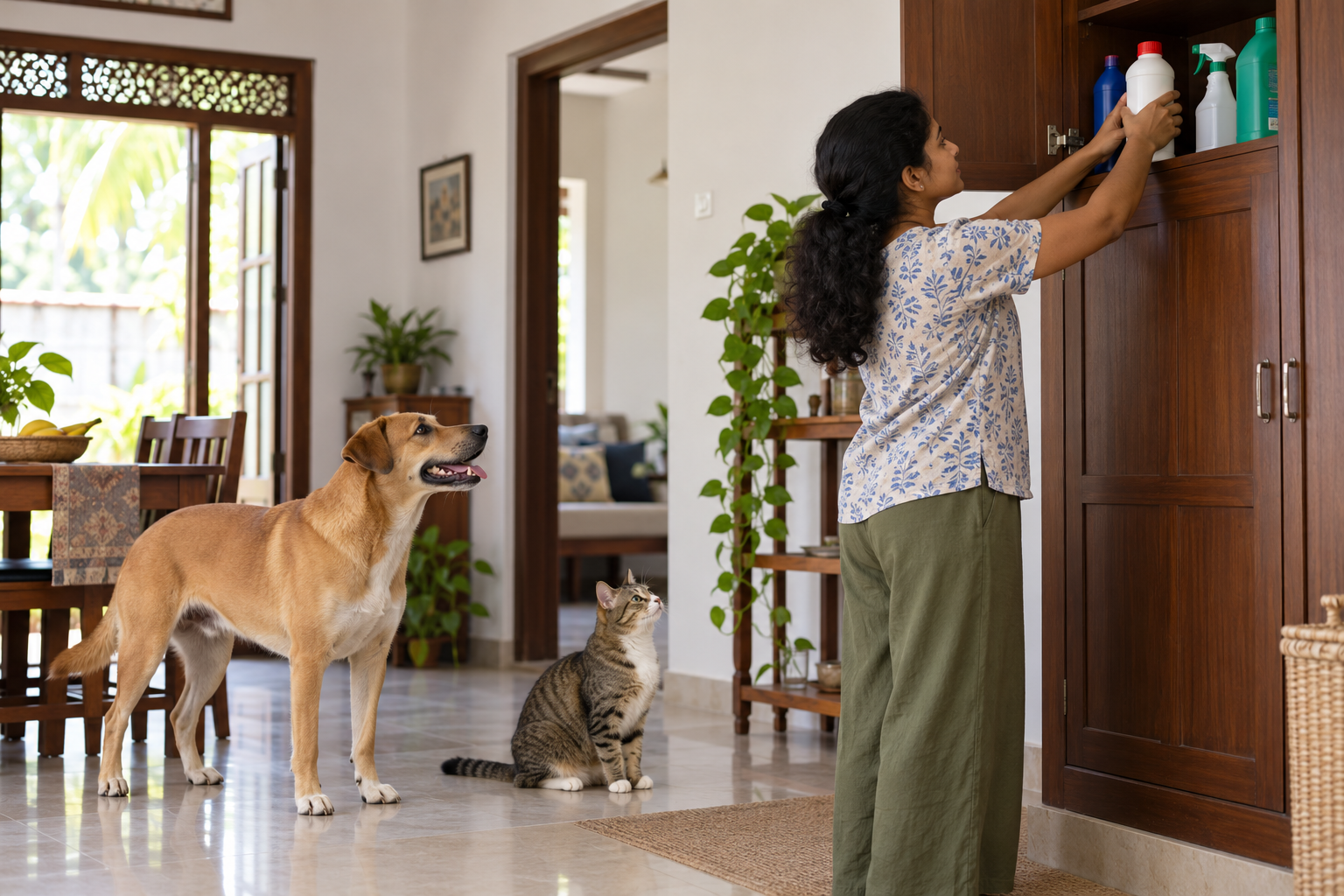
Store medicines, pesticides and cleaning products in secure cupboards in their original containers. Keep pets away when chemicals or rodent control products are being used. Ask everyone in the household to report a spill or missing packet immediately.
General education for dogs and cats; not a diagnosis or an individual treatment plan.