
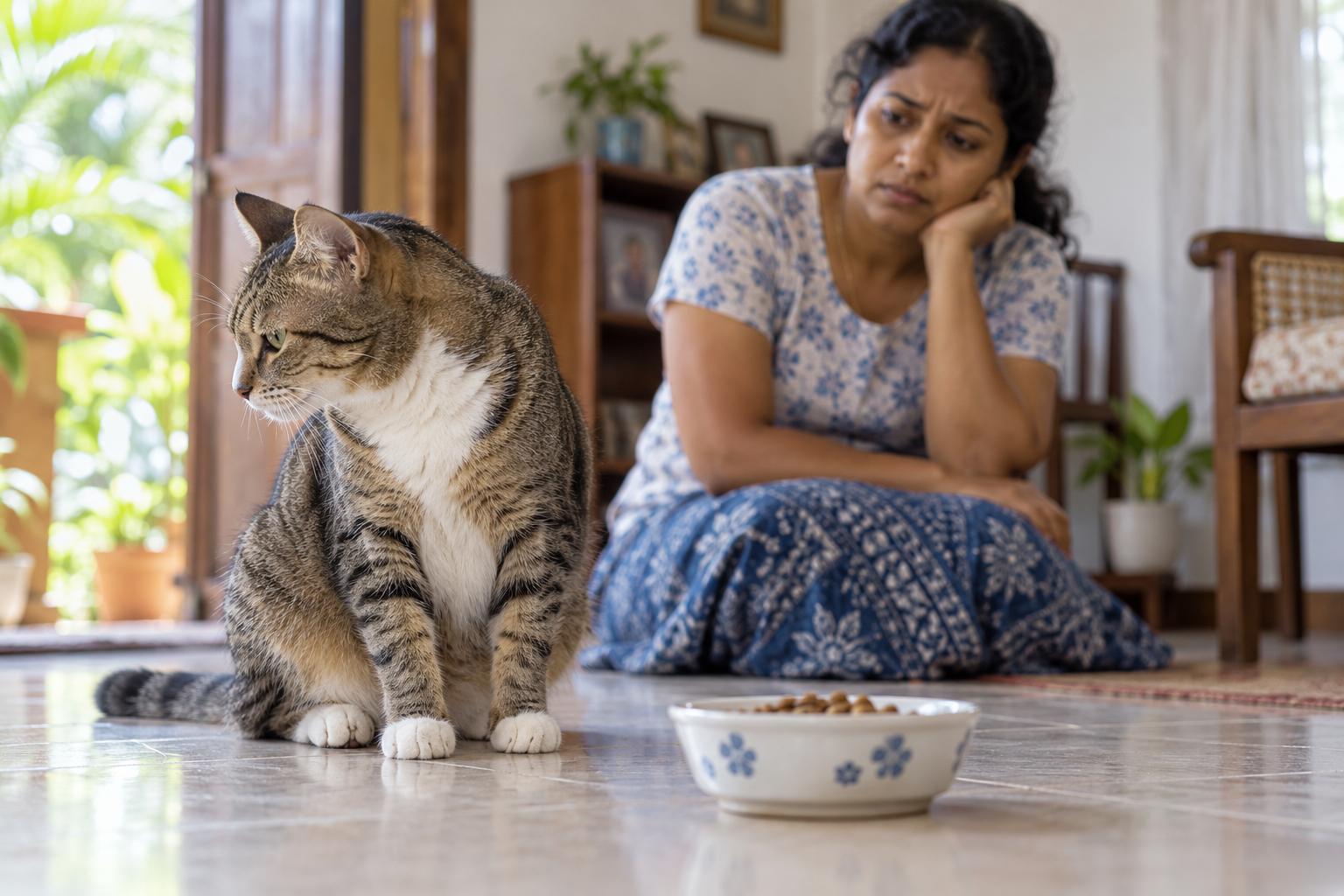
When should I call the vet?
Contact your vet promptly if your cat stops eating or eats noticeably less. Do not wait several days: even 24 hours without food can affect an adult cat’s health. Kittens and cats already being treated for an illness need advice sooner. Collapse, breathing difficulty, repeated vomiting, suspected poisoning or straining without passing urine need immediate help.
Why might a cat refuse food?
Painful teeth, nausea, kidney or digestive illness and stress can all affect appetite. A cat that approaches the bowl but drops food or walks away may be uncomfortable. The behaviour alone cannot tell you the cause. Tell the vet about changes at home and any medicines, as well as the food offered.
What you can do while arranging advice
- Offer a small amount of familiar food in a quiet place, away from other pets and the litter tray. Keep the bowl clean and fresh water available.
- Let your cat choose to eat. Do not push food into its mouth or syringe-feed unless the vet has given a specific plan.
- Do not give human medicines or appetite treatments borrowed from another pet. Repeatedly changing food can also make it harder to track what is happening.
Take a useful record to the clinic
Write down the last normal meal, roughly how much has been eaten since, drinking, vomiting and litter-tray changes. In a home with several cats, check which cat is actually eating. Bring current medicine details. Ask what to offer after the examination and when to call again if appetite does not improve.
General education for dogs and cats; not a diagnosis or an individual treatment plan.