
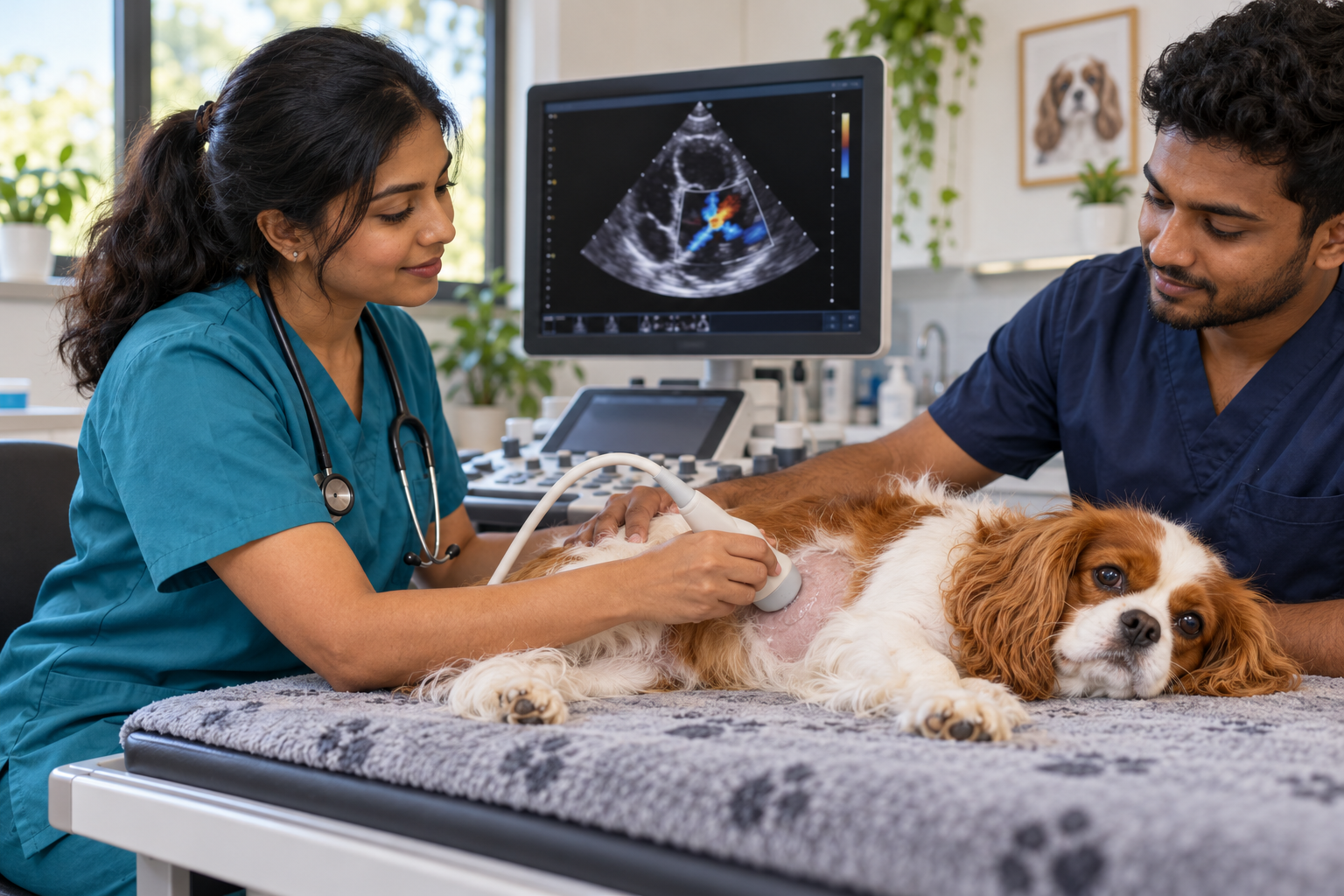
What does an echocardiogram examine?
Moving images allow the examiner to assess the heart’s chambers, walls and valves as the heart beats. Measurements help assess chamber size, muscle thickness and pumping. Doppler ultrasound provides information about the direction and speed of blood flow. Together these findings can help identify a leaking valve, abnormal heart muscle or certain defects present from birth. The results need interpretation alongside the examination and clinical history.
Why might my pet need an echo?
- A new or changing murmur, an unusual heart sound, or findings that suggest structural heart disease may prompt a referral.
- Unexplained fainting, reduced exercise tolerance or breathing changes may lead to heart investigations. An echo may be one of several tests; these symptoms have other possible causes.
- Some pets are assessed because of breed or family risk, another abnormal test, or a known condition that needs monitoring. Ask how the result could change care.
- A heart concern discovered before a planned procedure may need clarification to help the team assess anaesthetic risk and plan monitoring.
Echo, ECG and X-ray: why are they different?
- Echo: ultrasound images show heart structure, movement and blood flow.
- ECG: a recording of electrical activity helps identify rhythm problems. It does not replace detailed ultrasound images.
- Chest X-ray: assesses the chest, including lung changes and the heart’s outline. It helps answer questions that a heart scan alone cannot settle.
Preparing for your appointment
Bring the referral letter, earlier scans or reports and an accurate medicine list, including doses and the time last given. Note any fainting episodes, breathing changes and relevant family history. Contact the clinic for food, water and medicine instructions; do not stop heart medication or fast your pet on your own. If your pet is anxious, painful or difficult to handle, discuss this before travelling so the team can plan a suitable approach.
What happens during the heart scan?
Your pet will commonly rest on their side while a probe is held against the chest. A small area of fur may be clipped and gel applied to obtain useful images. Many pets can be examined awake with gentle support. Others need calming medication or sedation, chosen according to their health and the examination needed. The scan uses sound waves without ionising radiation. Tell the team if positioning causes distress; comfort and breathing take priority.
What will the results mean for treatment?
The report may identify a condition, describe its severity, or show that further investigation is needed. Ask the vet to explain what was measured and how the findings affect the plan. Some pets need medicines or changes to existing treatment; others need monitoring. Recheck timing depends on the diagnosis and clinical changes. An echo can inform anaesthetic planning, but it cannot guarantee that any future procedure will be risk-free.
Does a normal scan rule out all heart problems?
No. It describes what can be assessed at that examination. Disease can develop later, and an intermittent electrical rhythm problem may require an ECG or longer recording even when the structure looks normal. Blood pressure, blood tests or chest imaging may still be relevant. If the original symptom continues, tell your vet rather than assuming that one reassuring result explains everything.
Questions to ask before leaving
- How soon will I receive the report, and will it be sent to my usual vet? Agree who will coordinate treatment and follow-up, especially if you have travelled from another clinic.
- Does my pet need treatment now? Ask for written instructions and the signs that should trigger an earlier review.
- Can my pet eat and return to normal activity? Confirm this with the team, particularly if sedation was used.
- What if breathing worsens before the appointment? Seek urgent veterinary help for breathing difficulty or collapse. Do not wait for a booked scan or an online reply.
General education for dogs and cats; not a diagnosis or an individual treatment plan.