
A Sri Lankan starting point
A survey published in 2016 collected 100 questionnaires from dog owners visiting one veterinary practice in Colombo. Forty-two per cent fed only home-cooked food and 18 per cent only commercial food. This older, single-practice study describes feeding habits; it does not establish today’s national pattern or prove that either type of diet is nutritionally complete.
What should a puppy eat?
Choose food labelled complete and balanced for growth, with a formula suitable for the expected adult size. Large-breed puppies have particular nutritional needs. If you cook at home, discuss affordable ingredients such as rice, fish or chicken with your vet and ask for a properly formulated growth diet, ideally with veterinary nutrition expertise. Rice and meat mixed by eye are not a reliable complete diet. Do not add calcium or vitamin supplements without advice.
How much and how often?
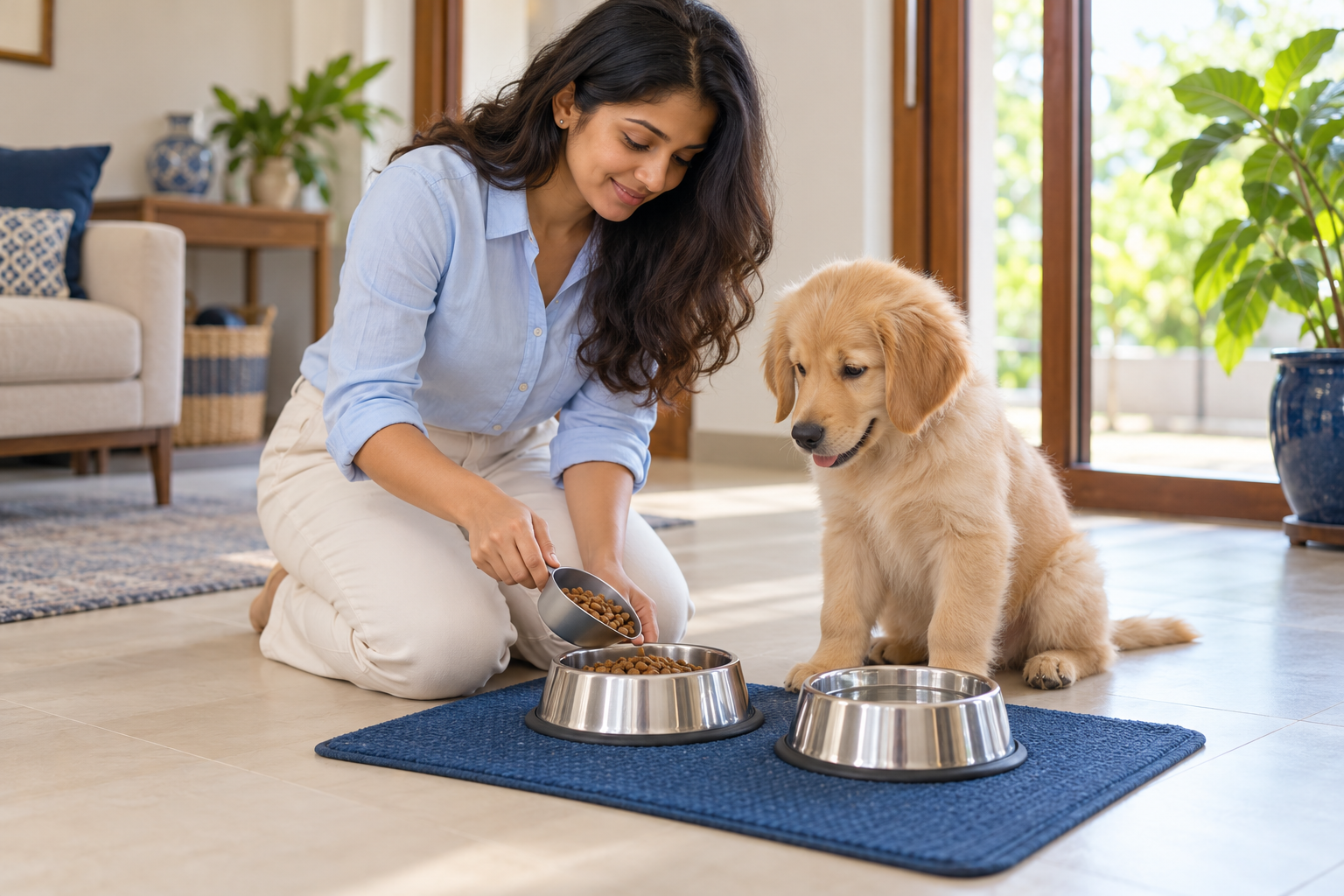
Start with the feeding guide for the exact product and your puppy’s age and size, then ask your vet to adjust it using weight and body condition. The daily allowance is for the whole day, not each meal. Young, weaned puppies generally need several small meals; many do well with three or four initially, moving towards two as they grow. Confirm the timing for your puppy, especially if very small, underweight or unwell. Measure food consistently and review portions as your puppy grows.
Does a puppy need milk?
A weaned puppy eating a complete growth diet does not need cow’s milk. It can upset digestion in some dogs. A puppy too young to be weaned, or unable to feed from its mother, needs prompt veterinary guidance on a suitable puppy milk replacer and feeding method. Do not use an improvised milk recipe or force-feed a weak puppy.
Make the routine easy to follow
- Keep fresh drinking water available. Wash bowls and store food according to the label; do not leave cooked or wet food sitting out in the heat.
- Keep treats small and count them within the daily allowance. Bring a list of all meals, snacks and supplements to check-ups.
- Change foods gradually rather than repeatedly switching brands or recipes.
- If your puppy stops eating, repeatedly vomits, has diarrhoea or seems weak, contact your vet promptly instead of treating it as fussiness.
General education for dogs and cats; not a diagnosis or an individual treatment plan.